

 Log In
Screening says coal fight far from finished
Posted on 20 May 2026 by Ryan Dahlman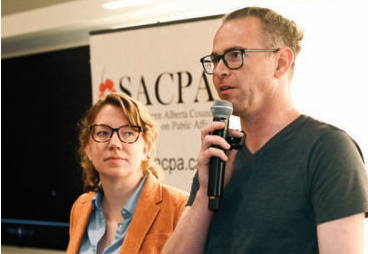
By Joe Manio
Alberta Newspaper Group
If anyone in the May 12 crowd thought Alberta’s coal fight had already been settled, The Eastern Slopes had other plans.
What was billed as a documentary screening at University of Lethbridge quickly became a pointed reminder that the battle over mining in the Rockies’ headwaters is far from over.
More than 50 people attended the special Southern Alberta Council on Public Affairs (SACPA) event in the BMO Auditorium to watch the 50-minute film by Lethbridge filmmakers Erin Rolfson and Graham Ruttan.
The documentary examines years of opposition to the proposed Grassy Mountain coal mine in the Crowsnest Pass and how many Albertans now view its return under Northback Holdings as a resurrection of a project they believed was dead.
That frustration formed the emotional backbone of both the film and the post-screening question-and-answer session.
“What was supposed to be a retrospective became something else,” Ruttan told the audience.
He said the filmmakers originally intended to celebrate a successful grassroots movement that helped stop the project. But before filming even began, rules changed again.
“So now it is both a celebration of the diverse communities that came together, and it’s a call for much more of the same,” he said.
The central concern throughout the night was water.
In the film, former Lethbridge mayor Chris Spearman warns the Oldman River basin is home to roughly two-thirds of Canada’s irrigated agriculture, with billions invested in farming and food production that could be jeopardized by contamination upstream.
“If excessive selenium levels are detected,” he says in the documentary, “our whole agri-food industry could shut down until the problem is resolved.”
Selenium — a byproduct associated with coal mining that can accumulate in waterways and harm fish, wildlife and human health — surfaced repeatedly during audience questions.
Former Alberta environment minister Shannon Phillips appears in the film saying the original review process found Grassy Mountain was not in the public interest because of fish habitat concerns, selenium risk and overstated economic benefits.
She also describes the rollback of long-standing coal protections in 2020 as a moment Albertans immediately recognized as opening the door to renewed mining proposals.
Environmental lawyer Nigel Bankes adds one of the documentary’s sharpest lines: “Calling a dead project an advanced project … it’s the kind of thing George Orwell would have written about.”
That quote drew knowing laughter Tuesday night.
The film also features country singer Corb Lund, who says he is not anti-resource development, but concluded the risk-reward equation on Grassy Mountain is poor.
“It’s really foolish and very short-sighted,” Lund says. Later, he adds bluntly that a “handful of jobs” is not worth jeopardizing downstream water supplies.
Former provincial biologist Kevin Van Tighem says in the documentary that eastern slopes protections existed for generations because governments long understood one simple truth: Alberta can replace many resources, but it cannot replace water.
Rancher and fisheries biologist Lorne Fitch recalls decades of damage from poorly regulated exploration roads and says the public response to renewed coal plans.
Jobs were also raised during the Q-and-A, with one audience member questioning claims of hundreds of permanent positions. Ruttan said figures often cited publicly were spread across the mine’s lifespan rather than guaranteed long-term employment.
One of the room’s strongest emotional moments came from Dr. Mike Bruised Head, who opened the evening with remarks about stewardship, future generations and protecting land and water.
Both producers said the repeated cycle of applications, hearings and appeals can feel designed to wear citizens down. But they urged people to keep signing, keep speaking and keep showing up.
To that end, canvassers for Water Not Coal gathered signatures before and after the screening.
SACPA hosted the event because the issue remains deeply relevant to Lethbridge and southern Alberta, where communities, farms and businesses rely on mountain water.
As people filed out into the night, the film’s closing lesson lingered in the room:
If citizens want this fight to remain history, they may have to keep making it news.
Leave a Reply
You must be logged in to post a comment.